

Thailand Mobile Gaming Behavior Report: Entertainment and Social Drivers Behind High Market Penetration
2025/11/28
This report, conducted by GMO Research & AI and Z.com Engagement Lab, examines mobile gaming behavior among Thai users, analyzing usage rate, key motivations, reasons for non-usage, gaming habits, and factors influencing game switching. The findings offer a comprehensive look into the real landscape of Thailand’s mobile gaming market.
Nearly 90% of respondents played mobile games — leisure entertainment remains the strongest driver
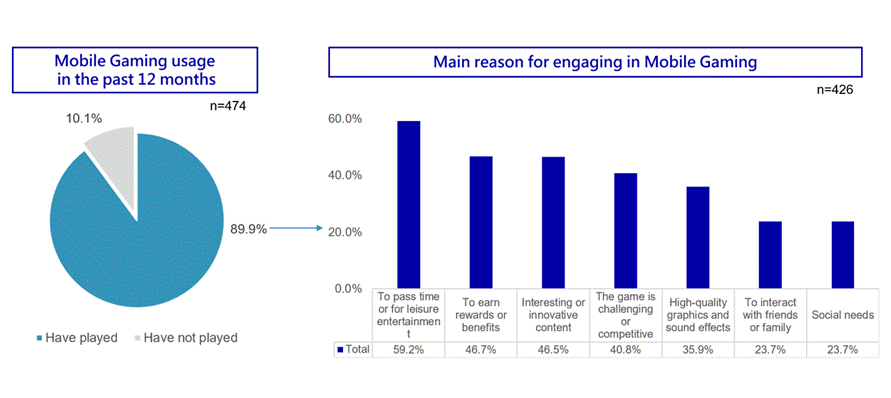
Survey results show that 89.9% of Thai respondents have played mobile games in the past 12 months, indicating extremely high market penetration.
Key motivations include:
● Passing time or leisure entertainment (59.2%) – the top reason
● Rewards and benefits (46.7%) and interesting or innovative content (46.5%) – strong pull factors
● Challenging or competitive gameplay (40.8%) – appealing to players driven by competition
● High-quality graphics and sound (35.9%) – a core expectation for many
● About one-fourth (23.7%) continue playing for interaction with friends or family and social needs
These findings indicate that mobile games in Thailand serve not just as entertainment, but as a multifaceted digital experience that satisfies leisure, competition, social interaction, and a sense of achievement.
Why some users do not play: lack of interest, time cost, and device limitations
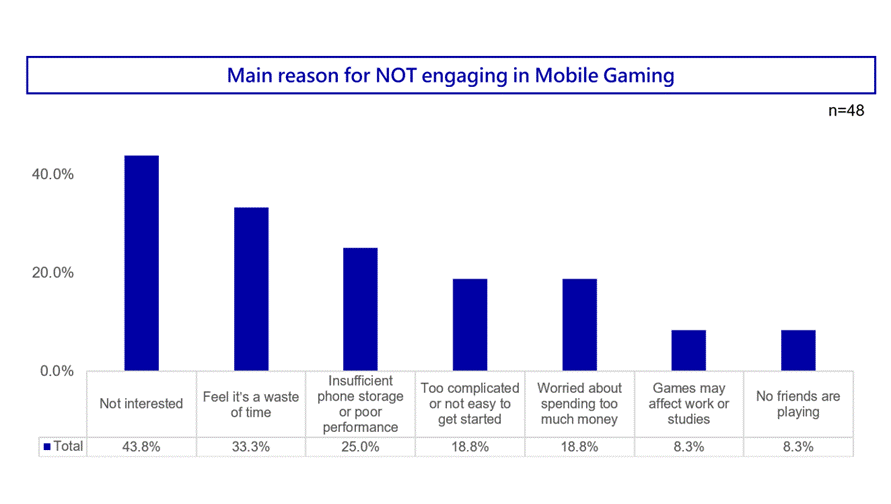
Despite the high penetration, 10.1% of respondents have not played mobile games in the past year.
Their main reasons include:
● Not interested (43.8%)
● Feel it is a waste of time (33.3%)
● Insufficient storage or poor device performance (25.0%)
● Find games too complicated or difficult to start (18.8%)
● Worried about spending too much money (18.8%)
● A minority worry that games may affect work or studies (8.3%) or report no friends playing (8.3%)
This reflects that some Thai consumers remain cautious about mobile gaming, particularly regarding time consumption, productivity concerns, and device barriers.
Usage habits: nearly half stick to one main game
Regarding actual gaming habits:
● 46.7% consistently play only one main game
● 31.0% switch between multiple games of different genres
● 21.8% play several games at the same time, but mostly within similar genres
This shows a strong “primary game dependence” trend in Thailand, where most players concentrate on one or two core titles.

What drives players to switch games: price, quality, and content
When considering switching to another game, the most influential factors are:
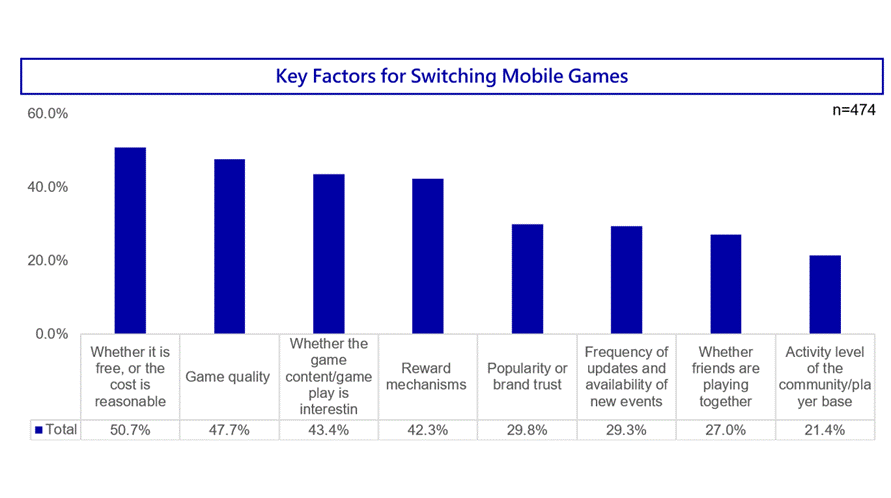
● Free to play or reasonable pricing (50.7%)
● Game quality (47.7%)
● Interesting gameplay or content (43.4%)
● Reward mechanisms (42.3%)
● Brand popularity / trust (29.8%)
● Update frequency and event availability (29.3%)
● Whether friends are also playing (27.0%)
● Activity level of the community/player base (21.4%)
Overall, Thai players prioritize value (cost-performance), game quality, content richness, reward design, and community engagement.
What could attract non-players: rewards, simplicity, and reasonable pricing
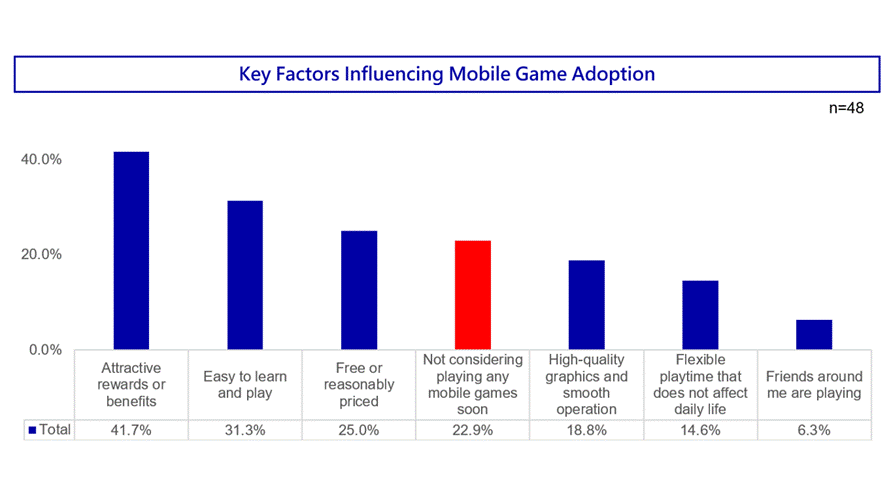
Among respondents who currently do not play mobile games, the top potential motivators include:
● Attractive rewards or benefits (41.7%)
● Easy-to-learn gameplay (31.3%)
● Free or affordable pricing (25.0%)
● High-quality graphics and smooth operation (18.8%)
● Flexible playtime that does not affect daily life (14.6%)
However, 22.9% say they would not consider playing mobile games in the near term, suggesting a firmly resistant segment in the market.
Thailand’s mobile gaming market is mature, but competition centers on “experience” and “incentives”
Overall, Thailand’s mobile gaming penetration is highly advanced, yet players remain sensitive to pricing, content quality, gameplay experience, community activity, and event engagement.
To expand their user base or improve retention, game developers must focus on:
● Enhancing new-player onboarding experience
● Strengthening reward systems and event design
● Offering fair and reasonable monetization models
● Building an active, welcoming player community
GMO Research & AI and Z.com Engagement Lab will continue monitoring mobile gaming behavior in Thailand to uncover emerging entertainment trends and support brands in developing more effective market strategies.
Survey Specifications
* Contents in this report were drafted with input from generative.ai

